Risk Exposure: What Type of Investor Are You?
You don't have time to read? Now you can listen.
In real estate investment, discussing risks is unavoidable. The problem begins when an investor's exposure is reduced to a single label: conservative, moderate or aggressive.
These classifications may be useful as a starting point, but they say very little about what happens within a real estate transaction. An investor considered conservative may be willing to participate in a development project. Conversely, an investor with a higher risk tolerance may reject an apparently stabilized asset if they believe the acquisition price does not adequately compensate for the exposure being assumed.
Risk profile is not a fixed label. It is the result of the interaction between the asset, the financial structure, the investment horizon and the assumptions required for a transaction to generate its expected return. There is no such thing as a risk-free real estate investment. The objective, therefore, is not to eliminate risk, but to identify it, mitigate it and determine whether the expected return adequately compensates for the residual risk.
A residential development project, for example, may present a projected IRR substantially higher than the yield of a stabilized asset. That difference does not necessarily mean that it represents a better opportunity. Part of the additional return exists precisely to compensate investors for risks that do not exist, or exist to a lesser extent, in a stabilized property: planning and licensing, construction, costs, timing, financing and sales. This is why comparing investments exclusively based on expected returns can lead to misleading conclusions.
Consider, purely as an example, a building in Lisbon's Baixa or Chiado district acquired for €15 million.
One investor may acquire it entirely with equity, retain the existing lease agreements and seek a relatively predictable return through rental income. Another investor may acquire the same asset at a 60% LTV, undertake a comprehensive refurbishment, reposition the property within a higher-end segment and sell it after four years.

Photo by Towfiqu barbhuiya on Unsplash
In the second scenario, leverage can significantly increase returns on equity if the business plan is successfully executed. But it also magnifies the impact of deviations in revenues, construction costs, financing rates or exit value. Debt does not simply create return. It creates exposure.
In a value-add transaction, residential development, hotel investment or an office or co-working asset, risks rarely exist in isolation.
There is market risk: a product that is rapidly absorbed today may face weaker demand three years from now. There is vacancy risk: an office building in an excellent location may lose a significant proportion of its income if its largest tenant leaves. There is development risk: licensing, construction, cost overruns and delays can fundamentally alter an initially attractive IRR. And there is liquidity risk. Unlike many financial assets, a property cannot normally be sold immediately without potentially affecting its price, and its liquidity can vary considerably depending on its location.
The Portuguese market currently provides a good example of the need to differentiate between these factors. In the first half of 2026, commercial real estate investment reached €1.375 billion, 13% higher than in the same period of the previous year, with international investors accounting for 56% of invested capital. Nevertheless, different segments continue to display significantly different pricing dynamics and perceptions of risk. In the second quarter, for example, the prime office yield stood at 5%.
An exceptional location, a high-quality building or a recognized operator can reduce certain risks. They do not, however, eliminate the risk associated with the acquisition price.
An excellent asset acquired on excessively optimistic assumptions may prove to be a worse investment than an asset with clearly identified issues acquired at a price that creates sufficient room to address them.
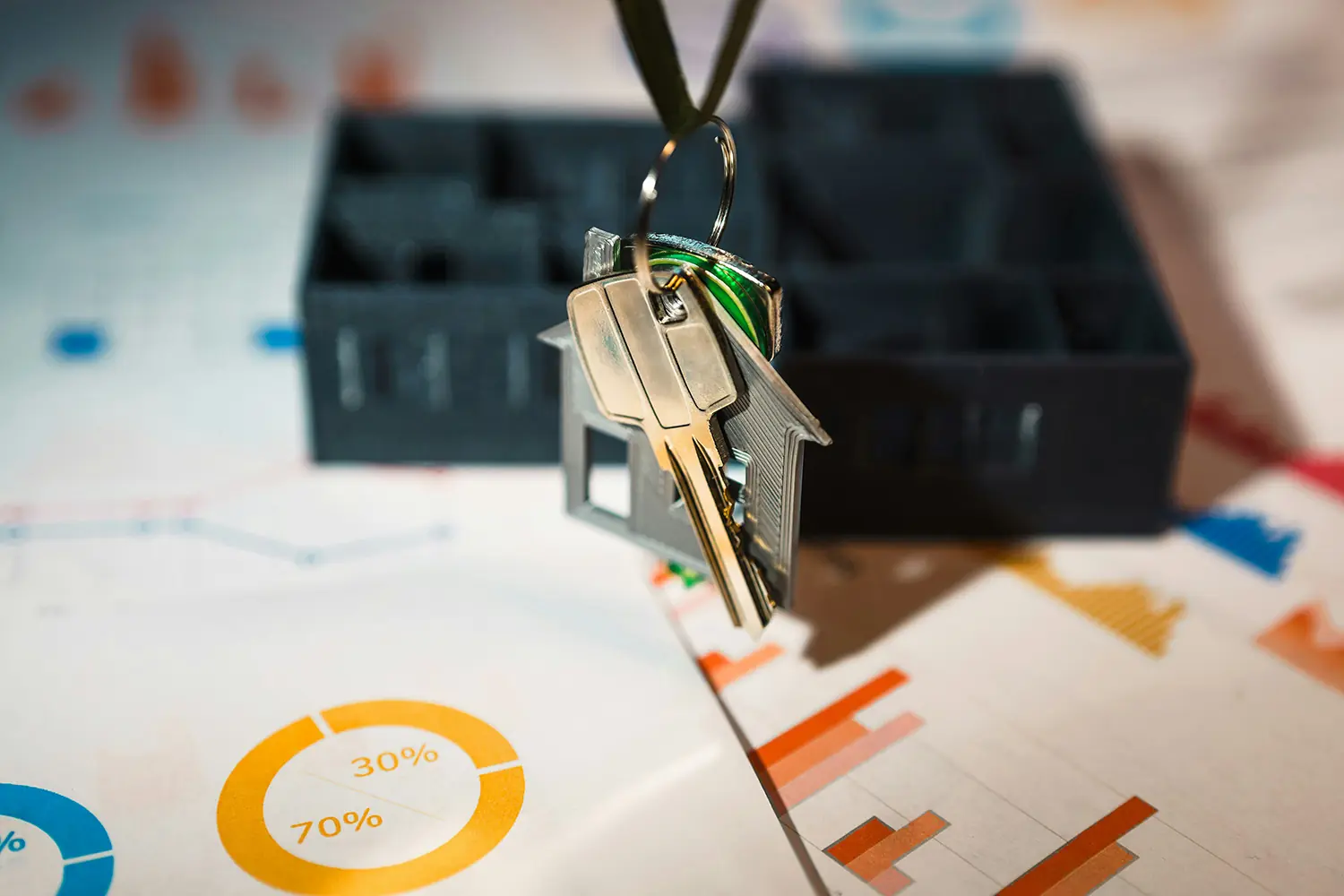
Photo by Jakub Żerdzicki on Unsplash
Consider the office market once again. In the second quarter of 2026, the vacancy rate in Greater Lisbon stood at 6.6%, while premium CBD rents remained at €32.00 per sqm per month. These are relevant indicators, but they are insufficient to assess an individual transaction. It is necessary to understand the precise location, the quality of the building, lease duration, tenant profile, contracted rent, required CAPEX and the future supply expected within that specific submarket.
In co-investment transactions, the analysis acquires an additional dimension. Risk no longer resides solely within the asset; it also exists within the partnership structure. An investor may participate in a residential development or a value-add transaction without assuming the entire financial or operational exposure alone. A local partner may contribute market knowledge, execution capabilities, access to opportunities and specialist expertise. But sharing capital is not enough. Investors must understand how interests are aligned, who has decision-making authority, who controls costs, how returns are distributed and what happens if the project deviates from the original business plan.
An 18% IRR is not necessarily better than a 12% IRR. Everything depends on the assumptions required to produce each of them.
The real work begins when those assumptions are stress-tested: higher-than-expected construction costs, slower sales, increased vacancies, more expensive financing or a less favorable exit yield. This is where the distinction between projected return and risk-adjusted return becomes clear. In real estate, assuming risk is part of investing. Assuming it without understanding precisely where that risk lies is something entirely different. This is where experience and the corresponding know-how can create meaningful additional value.
At TOTE SER Capital, we believe that the best prepared investor is not necessarily the one who accepts the least risk. It is the one who can assess the experience and track record of the partner with whom that risk is being undertaken.